Era Pickleball pickleball training: Drill Library and Routines
When you walk into a court with a purpose, the rhythm of the game shifts. Every shot becomes a data point, every movement a thread in a larger strategy. At Era Pickleball, the training philosophy is less about chasing the latest gadget and more about building a dependable toolkit. The drill library we rely on is expansive enough to cover the basics, refined enough to demand precision, and practical enough to translate into wins in real matches. This article isn’t a catalog of drills alone. It’s a map of how we think about pickleball training, how the routines get assembled, and how players—whether they’re stepping onto the court for the first time or dialing in elite-level execution—build momentum week after week.
Training is a living system. It breathes through your warmups, your routines, and the way you recover after a hard session. It’s also personal. Two players can perform the same drill and come away with different lessons because their bodies, habits, and perceived roles on the court differ. At Era Pickleball, we honor that individuality while maintaining a coherent framework that keeps athletes moving toward consistent, repeatable results.
The core of our approach rests on three pillars: technical proficiency, tactical intelligence, and physical durability. The drill library feeds all three. It’s not just about hitting the ball well; it’s about hitting the ball with intent, in the right sequence, and with the stamina to sustain performance under pressure. Let’s walk through how that looks on a typical week, how the library is organized in practice, and how players can tailor routines to their goals.
What makes a drill library valuable
A great drill library isn’t a random assortment of exercises. It’s a curated ecosystem that allows players to stack progressions, mix-and-match tasks, and push through plateaus without losing focus. Our library is built from real-world experience on public courts and private training halls, where the pace of the game teaches you rapid adaptation. The drills in our library emphasize two things: clarity and consequence. There’s a clear objective for each drill, and there’s a visible consequence when you execute or miss. That consequence isn’t punitive; it’s diagnostic. It tells you what to refine next.
A well-constructed drill ladder also makes room for failure without eroding confidence. In pickleball, errors are inevitable. What separates successful players from the rest is how quickly they recover, how cleanly they re-enter a sequence, and how well they translate the emotion of a mistake into productive next-steps. That mindset is embedded in how our drills are designed. They begin at a foundation level, gradually ascend toward complexity, and always culminate in a live-scenario push where decisions must be made under time pressure.
From a practical standpoint, the library is organized into modules that reflect skill domains. You’ll encounter groundstrokes and dinks with an emphasis on touch and control. You’ll find serve and return routines that stress pace variation and placement. You’ll discover transition drills that bridge defense and offense, which are crucial in doubles as well as singles. You’ll also see conditioning-adjacent activities that keep athletes honest about their endurance and recovery. The throughline is that each drill contributes to a larger plan rather than existing as an isolated task.
A typical training block at Era Pickleball
Think of a two to four week block as a narrative arc rather than a checklist. Week one sets the baseline. Week two nudges you toward integration. Week three tests the synthesis. Week four returns to consolidation and active recovery while maintaining the gains. Within that arc, you’ll encounter:
-
Technical reps that emphasize clean contact and geometry. We favor repetitions that reinforce proper positioning, paddle face alignment, and controlled footwork.
-
Tactical deception and decision-making. You’ll practice shots that entice your opponent into predictable responses, with penciled-in options for when the initial plan doesn’t land.
-
Situational drills that simulate common match flows. You might be taxed by long rallies to mimic late-game conditions, or you’ll face fast exchanges that require split-second choices.
-
Conditioning that mirrors the court’s demands. Pickleball is a high-intensity sport with bursts of speed, rapid changes of direction, and the need for efficient movement patterns.
Underpinning this structure is a realistic expectation about improvement timelines. Some players notice small gains after a week; others require multiple cycles to feel the shift in their game. It’s not about urgency. It’s about consistency and the maturity to respect the process.
The drill library in practice: sample pathways
No article about training would be complete without giving you a sense of what you might actually do on the court. Here are three representative pathways that illustrate how the drill library translates theory into concrete sessions. Each pathway includes a narrative tone that reflects how a player might feel and think while moving through the routine.
Pathway A: Foundation through rhythm
This pathway begins with a heavy emphasis on contact quality and shot selection. The idea is to engrain muscle memory for simple, repeatable exchanges and then broaden the horizon to incorporate pace and depth.
-
Begin with warm-up stations that emphasize core stability and ankle mobility. A short jog, dynamic leg swings, and a few sets of light foot pivots help the nervous system wake up and prepare the lower body for the demands of loping sidesteps and quick change of direction.
-
Move into a series of forehand and backhand drives from midcourt. The objective is to find a consistent contact point and to build a neutral stance that can absorb pace without collapsing posture.
-
Add a controlled dink ladder. The player progresses from shoulder-height dink to a low, soft contact while maintaining a stable base. The emphasis is on touch rather than velocity, with a clear boundary for error—too hard a dink invites the opponent to attack.
-
Finish with a live exchange drill where a partner feeds balls with varied spins and speeds. The goal is to keep rallies steady while picking apart the defense with a composed, deliberate tempo.
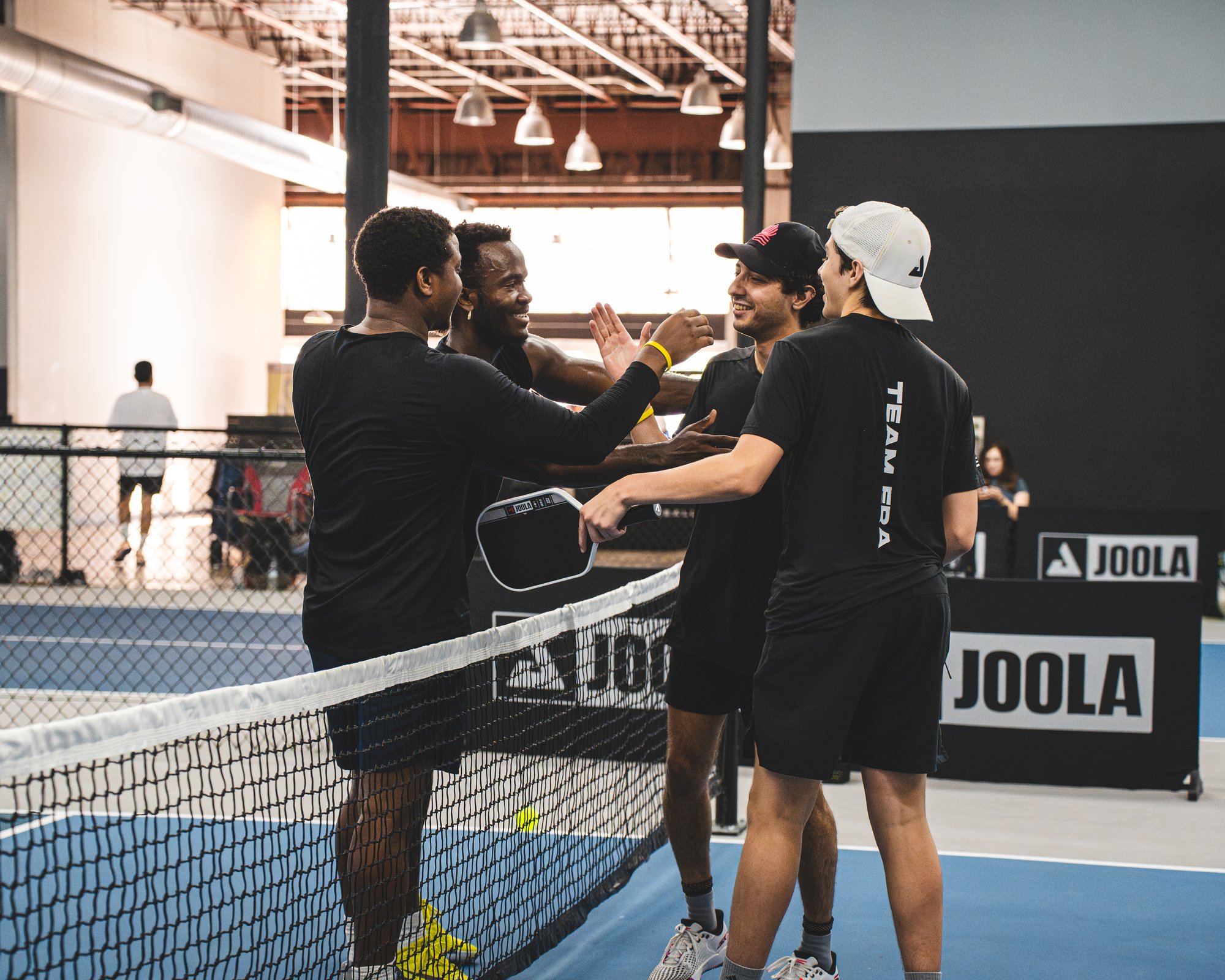
Pathway B: Transition play and decision making
In doubles and in singles when the court opens up, the gap between a solid rally and a winning point often lives in transition. This pathway guides you through those moments when a rally moves from baseline to midcourt to the kitchen and back again.
-
Start with a stair-step approach to drive and volley. One partner feeds a heavy drive from the baseline; the other steps in, meets the ball out in front, and executes a controlled volley before stepping back.
-
Introduce a transition drill that deliberately creates a decision point at the non-volley zone line. The player must decide between a dink, a drop, or a cross-court drive based on the setter’s position and the pace of the ball.
-
Layer in third-shot options with varied placement. The third shot is more than a recovery tool here; it’s a strategic weapon designed to push opponents off balance.
-
Close with a pressure-cooker situation—rapid-fire exchanges with time constraints that mimic late-game decisions. The player who stays calm and precise earns the point.
Pathway C: Conditioning integrated with tactical execution
Conditioning in pickleball can be practical and game-specific when it is embedded in decision-rich drills. This pathway treats energy management as a technical skill rather than as a separate issue.
-
Start with short, high-intensity rallies that force quick resets and precise footwork. The aim is to maintain form under fatigue and to identify where technique breaks down first.
-
Switch to a sequence that combines lobs, drives, and transitional shots. The player must manage space and anticipate an opponent’s next move while preserving balance and control.
-
Bring in a reset drill after a long rally. The reset is a deliberate back-and-forth sequence that reestablishes neutral court position, ensuring you’re ready for the next attack.
-
End with a cooldown that includes breath control and mobility work to optimize recovery. The goal is to leave the court feeling capable, not exhausted.
Routines that scale with goals
Your goals shape your routines, and our library is designed to scale gracefully with you. Whether you’re chasing competitive success, aiming to teach and coach others, public pickleball courts or simply seeking longevity on the court, these guidelines help translate the drill library into a sustainable practice life.
First, clarify your objective. It’s easy to drift into random practice when you don’t anchor your sessions to a specific aim. Do you want to improve your net presence, sharpen your serve, or increase your ability to read opponents’ spins? Once you identify the target, you can select drills that directly influence that area. You’ll notice a difference in how you approach warmups, how you carry through the exchange, and how you finish a point.
Second, organize your week around a small ecosystem of core drills. A few well-chosen tasks repeated with discipline can yield deep improvements. It’s not about doing more; it’s about doing the right things with intent and accuracy. The core drills often fall into three buckets: control and touch, transition and attack, and endurance and recovery. When you rotate through them, you get a more complete skill set without overwhelming the nervous system.
Third, integrate feedback loops. After a session, take a few minutes to reflect on what went well and what didn’t. It’s best done with a partner or a coach who can observe form, footwork, and shot selection. If you’re practicing solo, video yourself occasionally and watch with a critical eye. The goal is not to shame yourself for misfires but to capture a pattern you can correct next time.
Practical considerations and edge cases
No plan survives contact with a live rally unscathed. Here are a few real-world nuances that show up in training and how we address them in the Era Pickleball environment.
-
Variability in equipment affects feel and rhythm. Paddle weight, grip size, and even the ball type can alter how a drill lands. We encourage players to standardize as much as possible for comparable results during a block, but we also adapt when equipment changes are unavoidable. The key is to preserve intention, not to chase a different sensation every week.
-
Court layout matters. A hall with lower ceilings or uneven lighting changes how you judge depth and spin. In those cases, we emphasize mental cues and tactical anchors that help you stay committed to a plan, even when visual feedback is imperfect.
-
Fatigue resistance is a skill, not a given. Some days feel heavier than others, and not all sessions should push to the limit. Our philosophy favors deliberate, focused practice when the body is fresh and a bit more selective work when signals indicate a heavier load would be counterproductive. The aim remains steady progress and consistent technique.
-
Communication in doubles is a force multiplier. The drills designed for instrumenting doubles play emphasize verbal cues and spatial awareness. A simple call and a practiced hand signal can prevent miscommunication at crucial moments, which is often the difference between a good rally and a lost point.
-
Injury prevention requires honest pacing. We teach players to judge demands by heart rate, breathing, and the body’s own cadence. If a joint or muscle feels off, the smartest move is to slow down, modify the drill, and protect longer-term capability. Short-term wins aren’t worth risking a season.
A practical, two-list takeaway
To keep the article grounded, here are two compact lists that capture practical decisions you can adopt today. They are deliberately concise and designed to slot into a warmup or a mid-session adjustment.
-
Focus areas for a first three-week block
-
Consistent contact point on forehand and backhand drives
-
Controlled dink depth with stable footwork
-
Basic transition sequences that blend defense and attack
-
Third shot variation focusing on depth and placement
-
Short, measurable conditioning segments that resemble game pace
-
Signs you’re ready to escalate a drill
-
Your tempo improves without sacrificing form
-
You reproduce the same result under different feeds
-
You can sustain a longer rally with a controlled pace
-
You can switch from defense to offense smoothly on cue
-
You recover quickly between points and keep breathing steady
From coaching and community to personal growth
As a coach, I’ve watched players arrive with different levels of experience and different reasons for showing up. Some want to run a tournament calendar and collect medals. Others want to improve their health and enjoy a social game with friends that feels satisfying rather than chaotic. The drills we lean on are not rituals designed to exclude beginners. They’re designed to invite you in, give you a clear path, and reward discipline with tangible improvement. When a student reports back with a small victory—a confirmed drop shot that lands just inside the kitchen or a serve that slices away a returning option for the opponent—that moment is more valuable than a long list of drills performed perfectly without meaning.
There’s a quiet, almost nerdy joy in recognizing that your practice has genuine carryover. The simple act of hitting consistent, high-quality dinks becomes the backbone of your rallying ability. The same principle applies to the serve. A reliable, repeatable serve isn’t flashy, but it sets a tone for your entire game. It changes how your opponent must approach you. When you pair a stable serve with a disciplined transition into the net, you’re creating a structural advantage that can win points even when you’re not overpowering your opponent.
The coaching philosophy behind era pickleball pickleball training
Our coaching approach is grounded in case-by-case assessment, not a one-size-fits-all script. We start with questions that illuminate a player’s current stage and their aspirations. What do you want to be known for on the court? Are you seeking consistency in long rallies, or do you want to threaten the net with aggressive placement? How does your body respond to pressure late in matches? The drill library is then adapted, offering a blend of drills that reinforce fundamentals while allowing space for the player to experiment with personal style.
One useful mental model we share with athletes is that of a car engine. The engine thrives on a balanced blend of torque (power) and efficiency (control). In pickleball terms, that means you want to be able to generate pace without losing touch and to maintain accuracy when you’re stretched or pressured. The drills are built to enforce a balance between attack and defense, ideally moving you toward a position where you can impose your preferred tempo on the match without sacrificing the fundamentals that keep you in the point.
The role of ergogenic knowledge and recovery
A high-quality training plan also respects the body’s limits and the importance of recovery. It isn’t glamorous to talk about rest, but it is essential to sustainable progress. The most successful players I’ve coached understood that you don’t get better by grinding through pain or neglecting sleep, nutrition, and mobility work. Instead, you design practice blocks that end with a deliberate cooldown, with attention to breathing, hip and shoulder mobility, and a light stretching sequence that targets the back, hips, and calves. Recovery days are not excuses to slack. They are essential components of longevity and consistency.
With the right balance, it becomes possible to maintain a steady upward curve. You’ll notice that on the days after a well-planned session, your first miles of rally feel cleaner, your decisions appear more deliberate, and your reactions look sharper. The drills themselves don’t magically transform you overnight, but they create an environment in which improvement can occur naturally as you accumulate reps with intent.
A note on accessibility and community
Era Pickleball classes are designed to be inclusive. The training philosophy recognizes that players come from varied backgrounds, with different athletic histories and access to equipment. The drill library provides scalable options so that someone new to the sport can build confidence quickly, while a more experienced player can push toward advanced variations that demand higher levels of control and speed. The community around era pickleball coaching and pickleball classes Era Pickleball becomes a resource as much as a plan. Coaching sessions, group drills, and casual play days all contribute to a shared culture of growth.
What this means for you
If you’re a player evaluating whether to enroll in pickleball classes Era Pickleball or to explore era pickleball pickleball training on your own, consider the following:
-
The drills are not a checklist, they’re a framework. They’re meant to be layered, adapted, and evolved as your game evolves.
-
Progress is measurable, but not always immediate. Expect to notice small, incremental gains that build over weeks into a sturdier game.
-
The emphasis is on transferable skills. You want drills that translate beyond the practice court into real points.
-
Consistency beats intensity. Short, focused sessions across many weeks often yield better results than sporadic, long sessions that burn you out.
-
The coaching network is a resource. You’re not alone in your journey; a coach can help interpret feedback and tailor the library to you.
In closing
Training with purpose transforms ordinary practice into a pathway toward consistent performance. The drill library at Era Pickleball is more than a collection of tasks; it is a deliberate design to cultivate clarity, control, and confidence on the court. It respects the truth that improvement is often gradual, nonlinear, and deeply personal. It rewards players who show up with curiosity, who accept feedback with humility, and who chase improvement with patience and grit.
If you’re curious about integrating era pickleball coaching into your routine, or if you want to explore how pickleball classes Era Pickleball could align with your schedule, the best next step is to start with a fundamentals assessment. A qualified coach can observe your mechanics, how you move on the court, and how you handle transition points in a rally. From there, a tailored plan emerges—one that respects your current abilities, your time constraints, and your long-term goals. The interplay between technique, tactics, and conditioning is where progress really lives, and the drill library is your map to navigate that terrain.
The court welcomes those who commit to the climb. The ball rewards those who cultivate intention in every swing, every step, and every decision. When you bring a thoughtful, patient approach to training, you’ll find yourself not simply improving at pickleball but enjoying the journey of becoming a more skilled, more resilient player. The hours you invest in practice become the quiet foundation of your game, and the gains you realize will echo in every match you play. That’s the core of Era Pickleball pickleball training—the discipline to train well, the curiosity to adapt, and the confidence to trust that progress follows effort.